
 English
 French
 German
 Russian
 Italian
 Thai
Thai Turkish
 Japanese
 Spanish
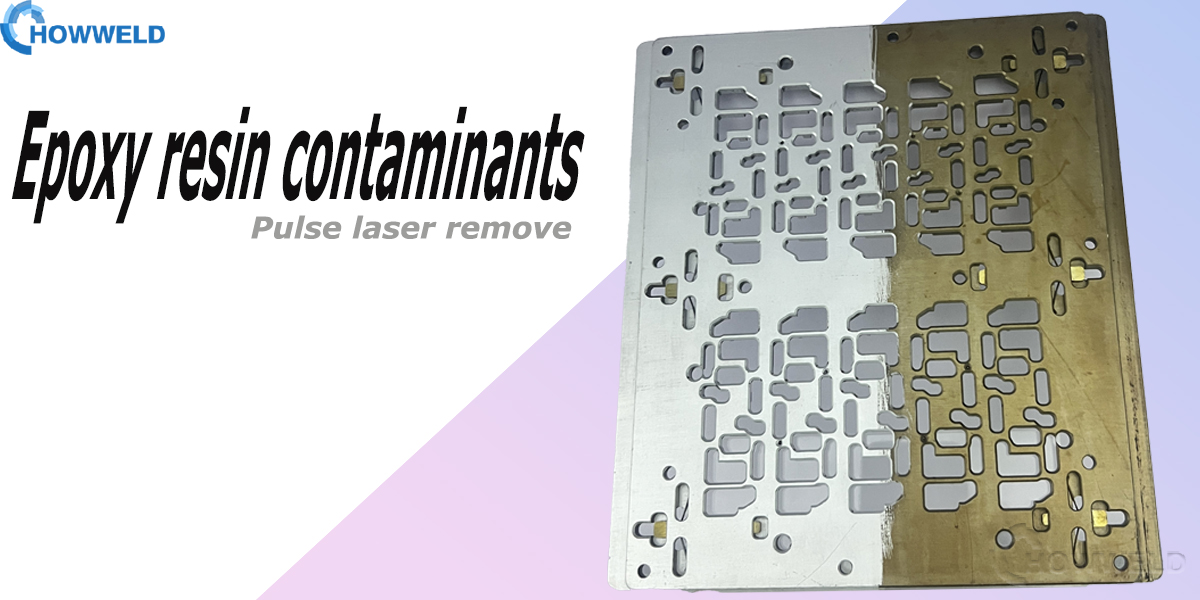
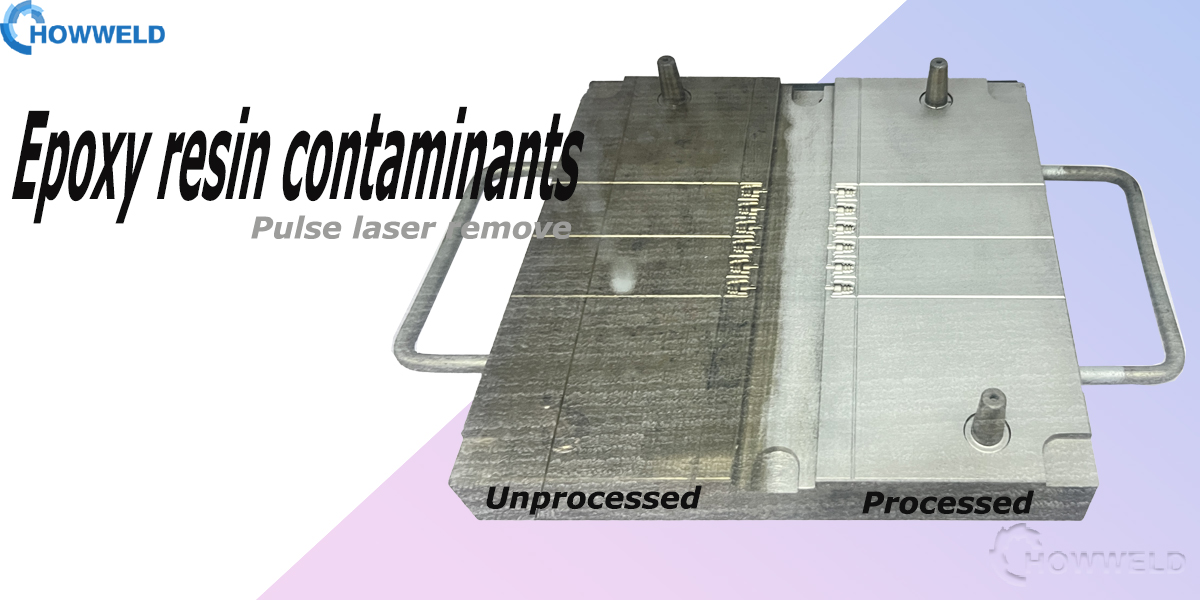
Epoxy resin pollutants removal from steel sheet surface by Pulse 200w laser machine
Time:2025-12-23
Views:133
How to Remove Epoxy from Metal Panels Using Pulse Laser Cleaning Machine
1. The Working Principle of Pulse Laser Cleaning for Epoxy Removal
Pulse laser cleaning technology achieves epoxy removal from metal panels based on the principle of laser-material interaction, which is a non-contact, high-precision cleaning method. When the pulsed laser beam is focused on the epoxy layer on the metal surface, the laser energy is rapidly absorbed by the epoxy resin. This instantaneous energy absorption causes the epoxy to undergo rapid thermal expansion, generating a strong thermal shock wave. The magnitude of this shock wave exceeds the adhesion force between the epoxy layer and the metal substrate, as well as the internal cohesive force of the epoxy itself.
As a result, the epoxy layer is instantly vaporized, cracked, or peeled off from the metal surface. It is worth noting that the metal panel has a significantly lower absorption rate of the selected laser wavelength compared to epoxy resin. This selective absorption ensures that the metal substrate hardly absorbs laser energy during the cleaning process, avoiding thermal damage such as deformation, discoloration, or changes in mechanical properties. The pulsed nature of the laser also allows for precise control of energy input, enabling targeted cleaning of the epoxy layer without affecting the integrity of the metal surface.
2. Advantages of Pulse Laser Cleaners in Epoxy Removal from Metal Panels
Compared with traditional epoxy removal methods (such as mechanical grinding, chemical cleaning, and sandblasting), pulse laser cleaning machines have obvious advantages in handling metal panels, making them the preferred choice for high-demand cleaning scenarios.
Firstly, it realizes non-contact cleaning. Unlike mechanical grinding which may scratch the metal surface, or chemical cleaning which may corrode the metal, the laser beam does not directly touch the metal panel during the cleaning process. This effectively protects the surface finish and structural integrity of the metal, especially suitable for precision metal components or panels that require high surface quality.
Secondly, it has high cleaning efficiency and precision. The pulsed laser can concentrate energy on a small area, quickly removing the epoxy layer. It can easily handle both large-area epoxy coatings and local epoxy residues. At the same time, through the adjustment of laser parameters (such as pulse width, frequency, and energy density), it can accurately control the cleaning range and depth, avoiding over-cleaning or incomplete cleaning.
Thirdly, it is environmentally friendly and safe. Traditional chemical cleaning methods will produce a large amount of chemical waste liquid, which pollutes the environment and endangers the health of operators. Pulse laser cleaning does not require the use of any chemical reagents or cleaning media, and the generated epoxy debris can be collected and processed uniformly, which is in line with environmental protection requirements. In addition, the operation process of the laser cleaning machine is relatively simple, and with appropriate protective measures (such as protective glasses), the safety of operators can be effectively guaranteed.
3. Key Operation Points for Pulse Laser Cleaning of Epoxy from Metal Panels
To ensure the effect of epoxy removal and the safety of the operation, it is necessary to grasp the key operation points when using a pulse laser cleaning machine to clean epoxy from metal panels. These points cover pre-cleaning preparation, parameter adjustment, operation process control, and post-cleaning inspection.
In terms of pre-cleaning preparation, first, it is necessary to inspect the metal panel. Understand the thickness of the epoxy layer, the material of the metal (such as aluminum, steel, copper, etc.), and the surface condition (whether there are scratches, rust, etc.). This helps to select the appropriate laser parameters. Secondly, clean the surface of the metal panel to remove surface dust, oil stains, and other impurities. These impurities may affect the absorption of laser energy by the epoxy layer, thereby reducing the cleaning effect. Finally, check the laser cleaning machine to ensure that the equipment is in good working condition, and the protective devices (such as laser safety doors, protective glasses) are complete and effective.
Parameter adjustment is a core link affecting the cleaning effect. Different epoxy thicknesses and metal materials require different laser parameters. Generally speaking, for thick epoxy layers, higher laser energy density and lower scanning speed should be selected; for thin epoxy layers, lower energy density and higher scanning speed can be used to avoid damaging the metal substrate. The pulse width and frequency also need to be adjusted according to the actual situation. For example, short pulse width is beneficial to reduce thermal diffusion to the metal substrate, and appropriate frequency can improve cleaning efficiency. It is recommended to conduct a small-area test on the metal panel first, adjust the parameters according to the test effect, and then carry out large-area cleaning after confirming the optimal parameters.
In the operation process, the operator should wear professional protective glasses to avoid eye damage caused by laser radiation. At the same time, keep a proper distance from the cleaning area and hold the laser cleaning head stably to ensure uniform scanning of the laser beam on the epoxy layer. The scanning path should be planned in advance to avoid missing cleaning or repeated cleaning in the same area (which may cause excessive heating of the metal). During the cleaning process, pay close attention to the changes in the epoxy layer and the metal surface. If abnormal phenomena such as discoloration of the metal surface are found, stop the machine immediately and adjust the parameters.
After cleaning, post-cleaning inspection is required. Check whether the epoxy layer on the metal surface is completely removed, and whether there are residues or stains. For precision metal panels, the surface finish and flatness can be detected with professional instruments. If there is incomplete cleaning, targeted supplementary cleaning can be carried out according to the specific situation. Finally, clean up the epoxy debris generated during the cleaning process to keep the operation site clean and tidy.
Above content writed by Howweld Team that we provide samples testing for free, free sample provided send to customers, welding laser processing for products, equipment with service, provide suitable laser welding, laser cutting solution for sheets plates tubes. Contact email: info@howweld.com
Welcome to inquire, visit and testing samples. We are looking forward to your presence.
Key words: pulse laser cleaning machine, 200w mini laser cleaning machine, epoxy resin remove, Remove Epoxy from Metal Panels
 Skype
Skype Whatsapp