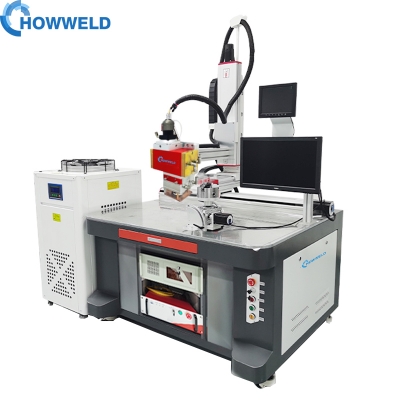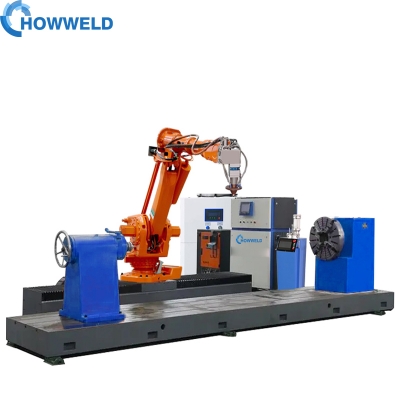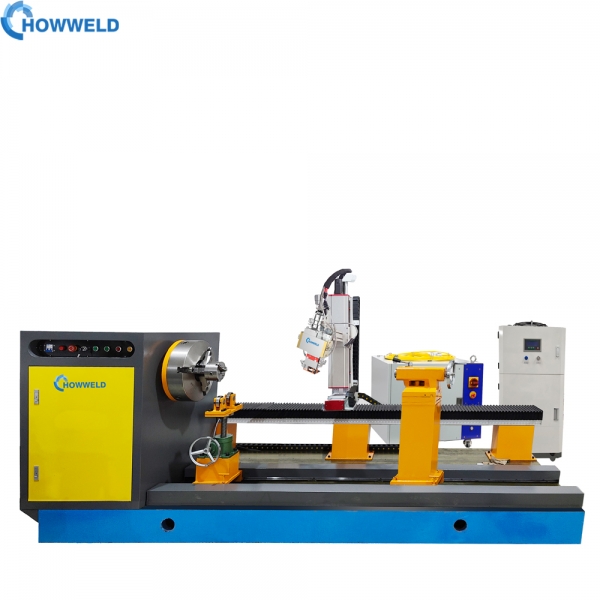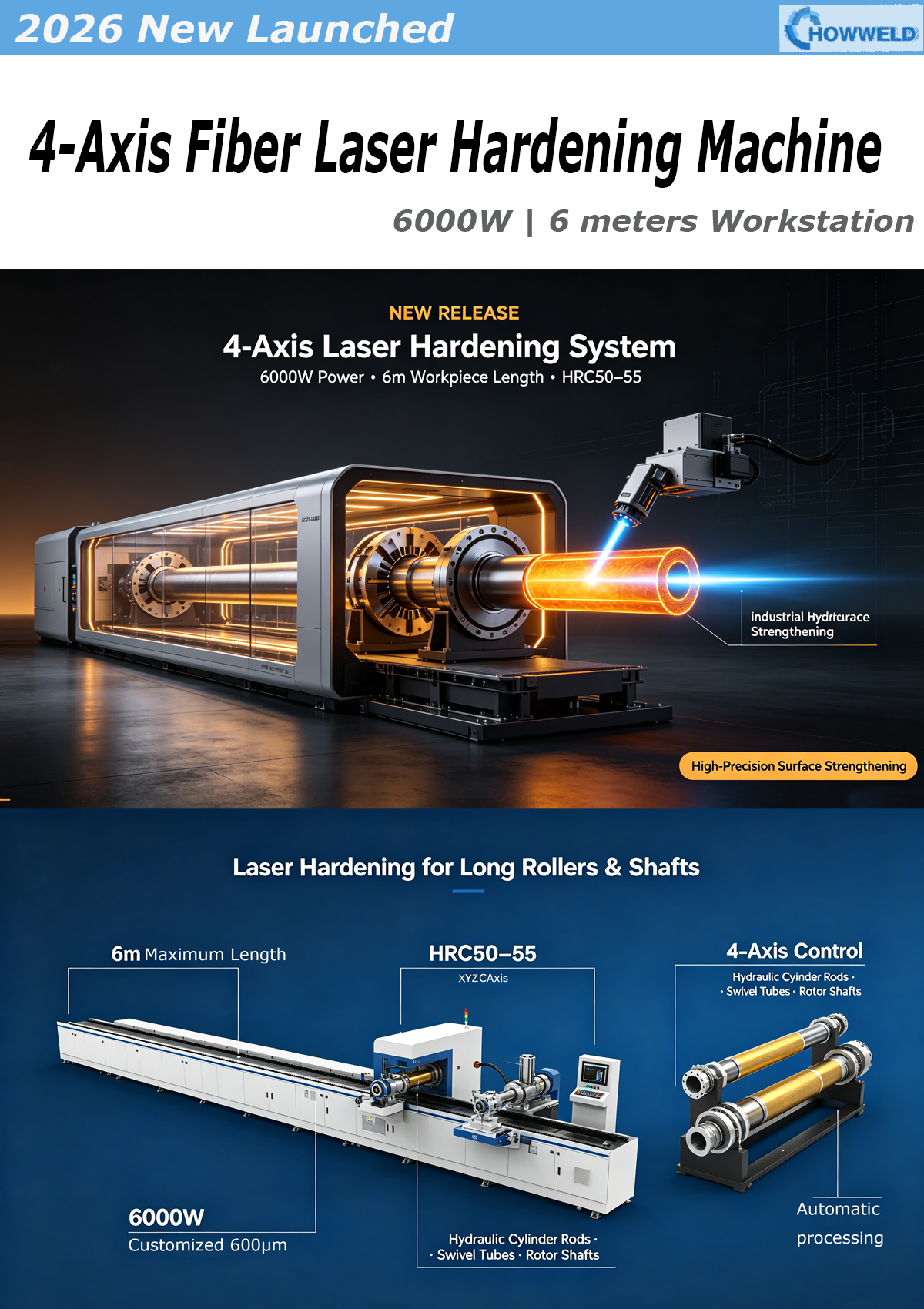
Laser quenching machine is a surface strengthening equipment that uses high-energy density laser beams (10 ³ -10 ⁵ W/cm ²) to rapidly heat and self quench the metal surface. The core is to instantly austenitize the surface layer (0.1-2 mm), and then form high hardness martensite through self cooling of the substrate, improving wear resistance and fatigue life while maintaining toughness of the substrate.
Working principle
Rapid heating: Laser focuses on the workpiece, causing the surface to rise in milliseconds to 850-950 ℃ (austenitization), with heat concentrated only on the surface and the substrate in a cold state.
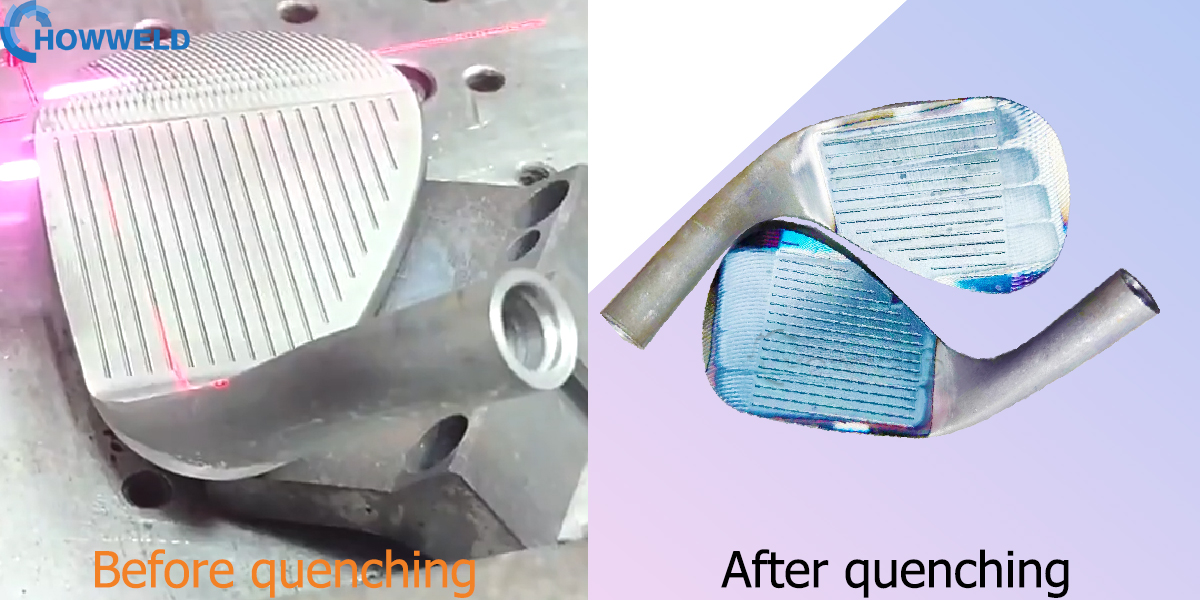
Self cooling quenching: After the laser is removed, the surface is rapidly cooled at 10 ⁴ -10 ⁶ ℃/s, transforming austenite into martensite and achieving self cooling quenching without the need for water/oil media.
Strengthening effect: The hardened layer is uniform, the grain size is fine, the hardness is 1-3 HRC higher than traditional quenching, and the wear resistance is increased by 1-10 times.
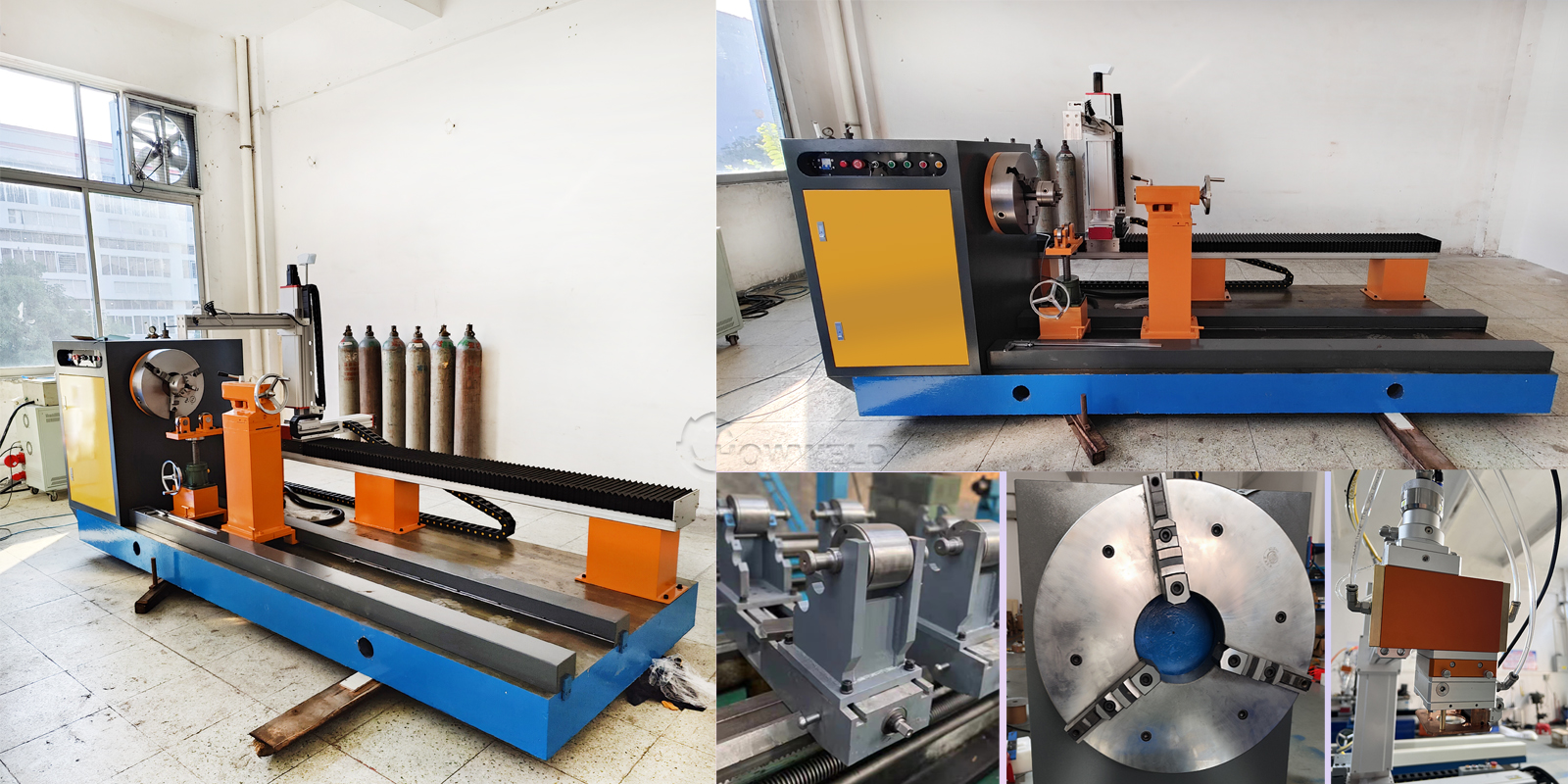
Laser Quenching Machine for Improve Metal Surface Hardhess
A laser quenching machine is an intelligent heat treatment equipment that uses high-energy density laser beams to achieve precise, efficient, and micro-deformation hardening of metal surfaces. Its core lies in rapid heating + self-cooling quenching, which forms a high-hardness martensite layer, making it a key surface strengthening equipment in high-end manufacturing.
I. Equipment Introduction (Definition & Core Components)
1. Basic Definition
A laser quenching machine is an automated heat treatment equipment that uses a high-power laser as the core. It focuses the laser beam through an optical system to locally and rapidly heat the surface of metal workpieces (to austenitizing temperature), and then realizes ultra-fast cooling through the workpiece‘s own heat conduction to complete martensitic transformation hardening.
2. Core Component Modules
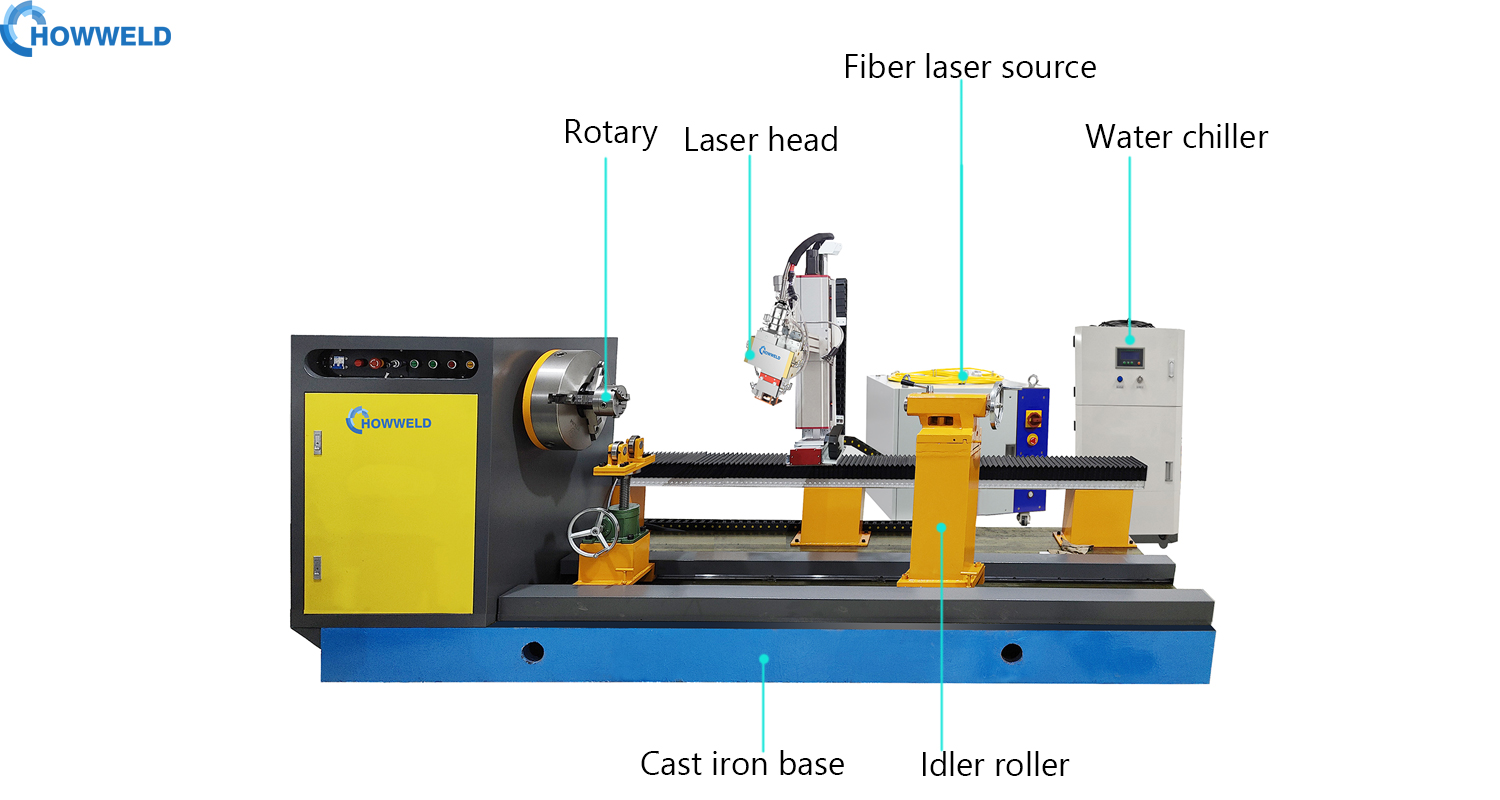
- Laser Generator: The mainstream types are fiber lasers, CO₂ lasers, and semiconductor lasers, with power usually ranging from 1kW to 6kW, which determines the quenching efficiency and depth.
- Optical Transmission and Focusing System: Including optical fiber, collimator, focusing lens, galvanometer/scanning head, to achieve precise beam transmission and trajectory control.
- CNC Motion Platform: Multi-axis linkage (2–5 axes), combined with programming to realize quenching of complex paths such as planes, curved surfaces, inner holes, and grooves.
- Cooling and Temperature Control System: Cools the laser and optical components; some models are equipped with closed-loop temperature control to ensure the uniformity of the hardened layer.
- Control System: Industrial computer + dedicated software to edit quenching trajectories, set parameters such as power/speed/spot size, and realize automation and process traceability.
- Auxiliary Devices: Anti-oxidation protective coating spraying, smoke purification, workpiece fixtures, etc.
3. Core Process Parameters
- Power density: 10⁴–10⁶ W/cm² (determines heating speed and depth).
- Scanning speed: 10–100 mm/s (matches heating and cooling rhythm).
- Spot size: 0.5–5 mm (adapts to different quenching areas).
- Hardened layer depth: 0.3–2.0 mm (conventional); fusion quenching can reach 1.5–2.5 mm.
II. Working Principle (Three-Stage Phase Transformation Mechanism)
1. Rapid Heating Stage
The high-power laser beam is focused on the workpiece surface, and the surface temperature rises to 900–1100℃ (austenitizing temperature) within 0.1–1 ms, with a heating rate of 10⁵–10⁶℃/s. Only the surface layer undergoes phase transformation, while the matrix remains in a cold state.
2. Solid-State Phase Transformation Stage
The surface metal quickly forms a uniform austenite structure. Due to the extremely short heating time, the grains have no time to coarsen, laying the foundation for the subsequent high-hardness martensite.
3. Self-Cooling Quenching Stage
After the laser beam moves away, the heat is quickly conducted through the matrix, with a cooling rate exceeding 10⁵℃/s. Austenite directly transforms into fine acicular martensite without external cooling media such as water/oil, forming a surface hardened layer with high hardness, wear resistance, and fatigue resistance.
III. Technical Features & Core Advantages
1. Precision and Deformation Control (Core Advantage)
- Micro-deformation: The heat-affected zone is only 0.1–1 mm, and the workpiece deformation is < 0.05 mm, so high-precision parts do not need subsequent correction.
- Precise and Controllable: It can accurately quench local areas (tooth surfaces, cutting edges, cavities) and complex structures (inner holes, deep grooves, curved surfaces) without affecting non-processing areas.
- Uniform Hardened Layer: Small hardness fluctuation, 1–3 HRC higher than induction quenching, and wear resistance increased by 15%–20%.
2. Efficiency and Environmental Protection
- Efficient and Fast: Completed in a single process, no preheating/insulation/post-tempering required, greatly shortening the production cycle.
- Green and Environmentally Friendly: No quenching media (water/oil), no smoke/waste liquid, low energy consumption, in line with clean production requirements.
3. Process Flexibility and Adaptability
- Flexible Processing: CNC programming quickly switches trajectories, adapting to multi-variety and small-batch production.
- Wide Material Adaptability: Suitable for medium and high carbon steel, alloy steel, cast iron, die steel, etc., such as 45# steel, 40Cr, H13, gray cast iron, etc.
- No Preprocessing Required: Most workpieces can be directly quenched, simplifying the process.
4. Performance Improvement
- High Hardness: The hardness of the hardened layer reaches 52–60 HRC, with fine structure, high strength and toughness.
- Fatigue Resistance: Compressive stress is formed on the surface, significantly improving the fatigue life of parts.
- Corrosion and Wear Resistance: The surface is densified, reducing wear and corrosion rates.
IV. Main Models & Classification (By Application Scenarios)
1. By Laser Type
- Fiber Laser Quenching Machine: Excellent beam quality, high efficiency, and simple maintenance. Suitable for precision parts, molds, gears, with mainstream power of 1–4 kW.
- CO₂ Laser Quenching Machine: High power (3–6 kW), uniform spot. Suitable for large workpieces, rolls, guide rails, but large in size and high in energy consumption.
- Semiconductor Laser Quenching Machine: High electro-optical conversion efficiency and small size. Suitable for small parts, inner holes, local strengthening, with power of 0.5–2 kW.
2. By Structure and Purpose
- Desktop/Small Quenching Machine: Desktop type, suitable for small precision parts, tools, medical devices, small footprint and easy operation.
- Gantry/Large Quenching Machine: Large stroke and high load-bearing capacity, suitable for large molds, rolls, construction machinery parts, supporting multi-axis linkage and automatic lines.
- Portable/Handheld Quenching Machine: Flexible optical path and handheld operation, suitable for on-site repair of large workpieces, local re-quenching, inner holes/deep grooves, with extremely high flexibility.
- Specialized Quenching Machine: Such as gear quenching machine, guide rail quenching machine, mold-specific quenching machine, optimized structure and process for specific parts.
V. Industry Application Scenarios (Core Fields & Typical Cases)
1. Automotive Industry (Widest Application)
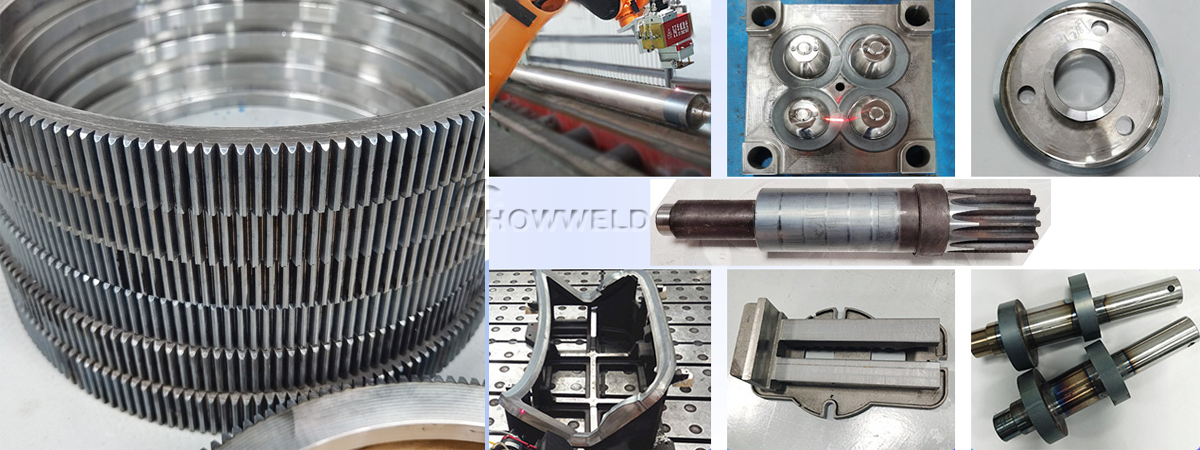
- Engine Components: Crankshafts, camshafts, valves, cylinder liners, gears, bearing seats, improving wear resistance and fatigue life, reducing failure rates.
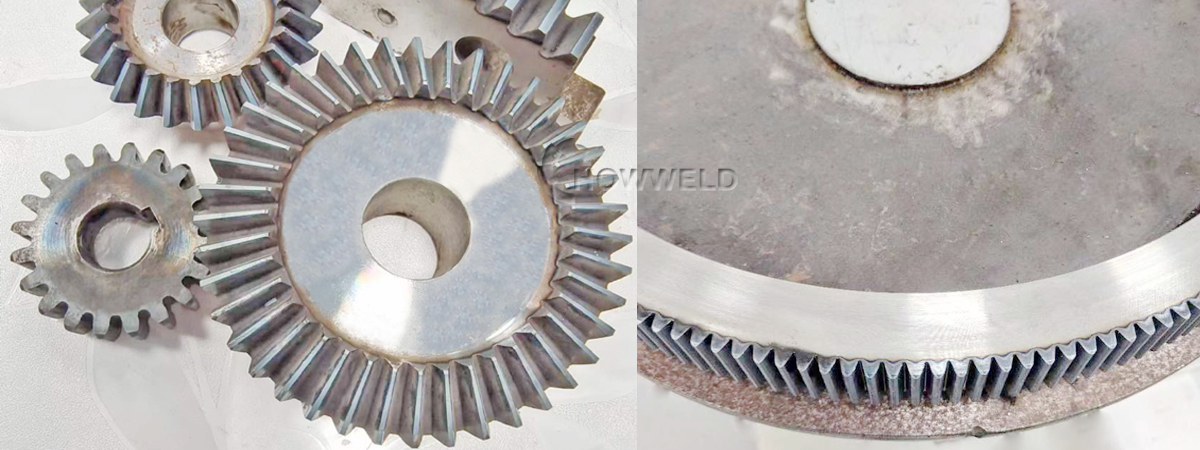
- Transmission: Gears, synchronizers, shafts, precise tooth surface quenching, small deformation and high meshing accuracy.
- Chassis and Braking: Brake discs, steering knuckles, half shafts, strengthening surface hardness and improving durability.
- New Energy Vehicles: Motor shafts, reducer gears, battery case molds, adapting to lightweight and high-precision requirements.
2. Mold Manufacturing (High-Value Application)
- Cold Work Molds: Punching molds, trimming molds, drawing molds, quenching of cutting edges and cavities, hardness up to 58–62 HRC, service life increased by 3–5 times.
- Hot Work Molds: Die-casting molds, forging molds, hot extrusion molds, surface strengthening of H13 and other mold steels, resistance to thermal fatigue and anti-sticking.
- Plastic Molds: Cavities, cores, sliders, improving surface hardness and wear resistance, reducing mold repair frequency.
3. Machinery Manufacturing & Metallurgy
- Transmission Components: Large gears, worm gears, spline shafts, guide rails, sliders, local precise quenching, small deformation and high precision.
- Metallurgical Rolls: Hot/cold rolling rolls, guides, straightening rolls, surface strengthening, improving wear resistance and extending roll change cycle.
- Construction Machinery: Excavator bucket teeth, crusher hammers, bearing seats, pins, strengthening vulnerable parts and reducing maintenance costs.
4. Aerospace (High-Precision Application)
- Engine Parts: Blades, disks, shafts, gears, surface strengthening of high-temperature alloys/titanium alloys, meeting the requirements of high strength, high fatigue, and lightweight.
- Structural Components: Landing gear, bearings, fasteners, local quenching, improving reliability and service life.
5. Other High-End Manufacturing
- Medical Devices: Surgical instruments, orthopedic implants (such as joints, screws), surface hardening of stainless steel/titanium alloys, balancing biocompatibility and wear resistance.
- Tools and Cutting Tools: Drills, milling cutters, taps, measuring tools, edge strengthening, improving cutting performance and service life.
- Rail Transit: High-speed rail/subway gears, shafts, brake discs, surface strengthening, ensuring operational safety and durability.

Key words: Laser Surface Hardening Equipment; High Power Laser Quenching Machine; Mold Laser Quenching System;
Distortion-Free Laser Heat Treatment; Handheld Laser Quenching Gun; Fiber Laser Quenching Machine for Gear Shaft.
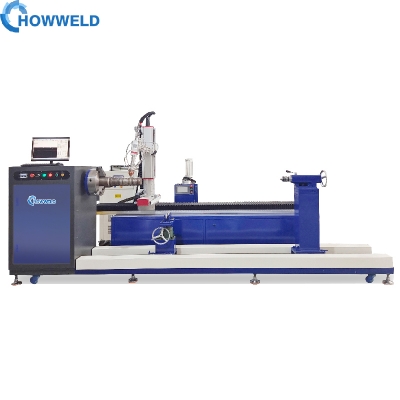
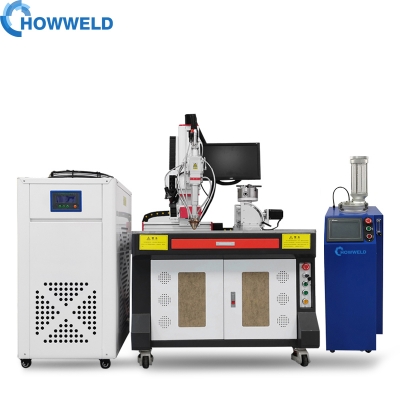
Key words: Laser Surface Hardening Equipment; High Power Laser Quenching Machine; Mold Laser Quenching System;Distortion-Free Laser Heat Treatment; Handheld Laser Quenching Gun; Fiber Laser Quenching Machine for Gear Shaft.